


Introduction
In the heart of Emirati culture lies an unwavering principle: a guest is a gift from God. This profound belief finds its most beautiful and daily expression in the traditional serving of Gahwa (Arabic coffee) and dates. Far more than a simple refreshment, this ritual is a sacred language of welcome, respect, and generosity. It is a performance steeped in symbolism, where every element—from the specific pot used to the manner of pouring—communicates a deep-seated cultural code. This article delves into the intricate art of this hospitality, exploring the tools, the ceremony, and the unspoken rules that transform a cup of coffee into a powerful affirmation of community and shared humanity.
The Tools of the Tradition: Dallah, Finjan, and More
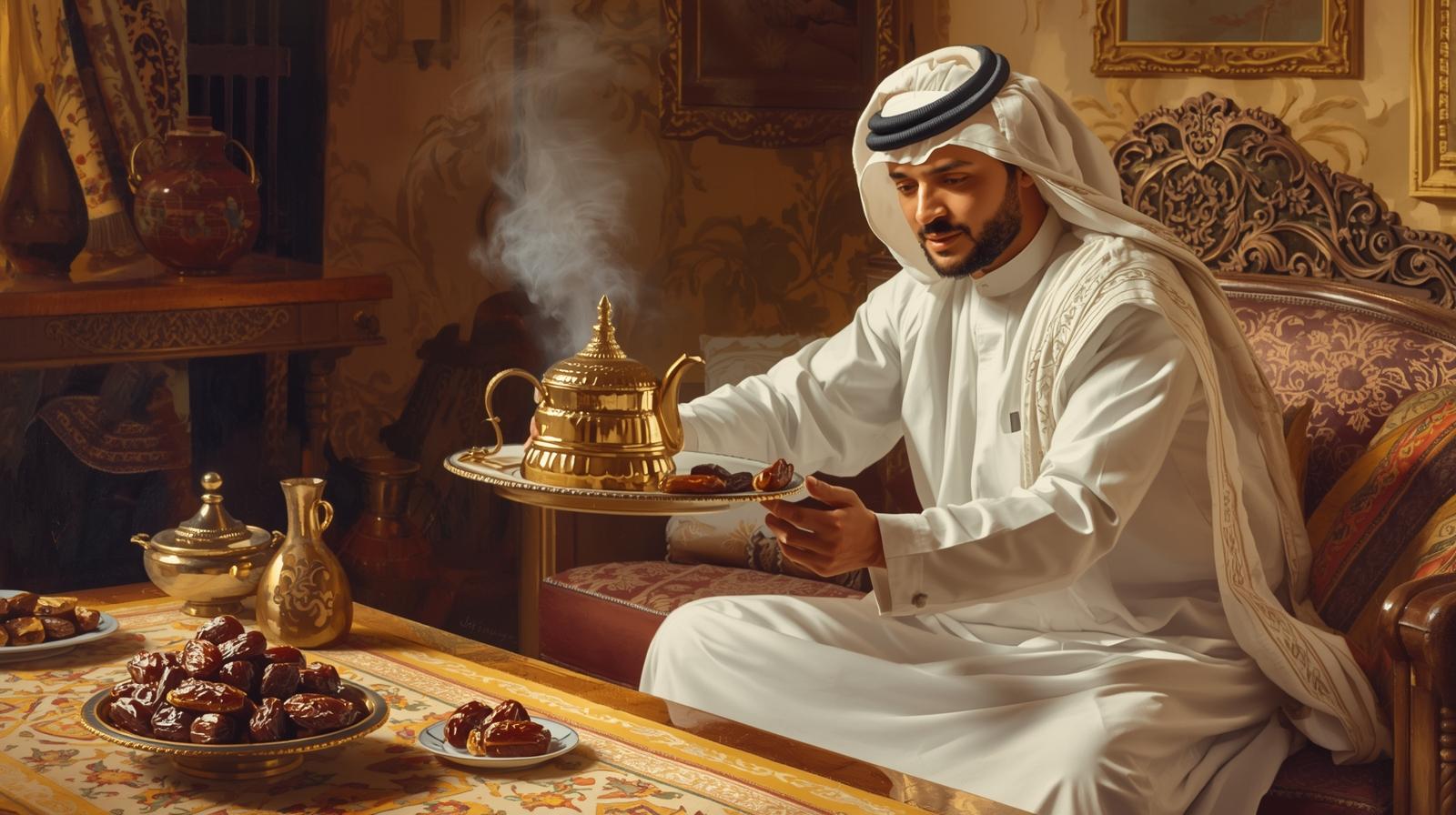
The ceremony begins with its distinctive implements, each with a specific name and purpose. The coffee itself is brewed in a “dallah,” a traditional pot often made of brass or stainless steel, with a graceful curved spout and a prominent beak. The dallah is not merely functional; it is a national symbol, featured on the UAE’s one-dirham coin and in countless works of art. The coffee is served in small, handleless cups called “finjan.” These cups are deliberately small to ensure the coffee is consumed while it is hot and fresh, and their size encourages the guest to partake in multiple servings, prolonging the social interaction. The ceremony is typically presented on a “sinya,” a decorative tray that holds the finjans, the dallah, and a container for the dates. The dates, often the prized Khalas or Lulu varieties, provide a natural sweetness to balance the bitter notes of the coffee, representing the balance of life itself.
The Ritual of Preparation and Serving
The preparation of Gahwa is a careful art. It is not a dark roast but a light one, often infused with cardamom and sometimes a hint of saffron or cloves. The beans are lightly roasted, ground, and then brewed directly in the dallah. The serving ritual is where etiquette comes to the fore. The “muqahwi,” or coffee server, holds the dallah in their left hand and the finjan in their right. They pour a small amount—typically just a few sips—into the finjan and present it first to the most senior or honored guest. The guest receives the finjan with their right hand as a sign of respect. A key part of the ritual is the continuous offering; the muqahwi will circle the room, replenishing cups as soon as they are empty. To indicate you have had your fill, you must shake the finjan gently from side to side. Understanding this subtle signal is crucial, as verbally refusing more coffee is considered impolite.
The Symbolic Language of Generosity and Community
Every gesture in the Gahwa ceremony is laden with meaning. The initial serving to the most senior person reinforces social hierarchies and respect for elders. The act of serving with the right hand is a Sunnah (prophetic tradition) and a universal sign of honor in Islamic culture. The constant replenishment of the cup is a tangible demonstration of the host’s generosity and desire for the guest to stay. This ritual transforms a simple meeting into a meaningful social bond. It is performed in the “majlis,” the traditional sitting room where community matters are discussed, disputes are resolved, and relationships are strengthened. The sharing of Gahwa and dates thus becomes the glue that holds the social fabric together, fostering dialogue, trust, and a shared sense of identity.
Preservation in a Modern World
In a fast-paced, modern society, the tradition of Gahwa has not faded; it has evolved and been institutionalized. It remains the cornerstone of welcome in government offices, corporate boardrooms, and private homes. The UAE government has actively worked to preserve this intangible heritage, with initiatives to teach the ceremony in schools and cultural centers. International hotels across the UAE train staff in the correct protocol, ensuring that visitors receive an authentic experience. Furthermore, Emirati families continue to pass the ritual down to their children, ensuring that the values of hospitality and respect it embodies remain a core part of the national character. The sight of a young Emirati seamlessly preparing and serving Gahwa is a testament to the living, breathing nature of this tradition.
Conclusion
The serving of Gahwa and dates is much more than a culinary custom; it is the soul of Emirati hospitality made visible. It is a ritual that demands presence, encourages connection, and eloquently expresses values that money cannot buy: respect, generosity, and community. In a world increasingly defined by haste and digital interaction, this ancient ceremony offers a moment of pause, a deliberate act of human warmth. It reminds both Emiratis and visitors alike that at the core of this futuristic nation beats a heart that has always known the true meaning of welcome.